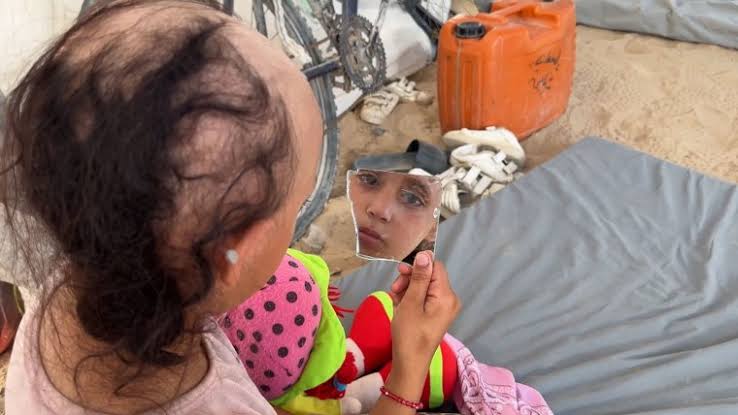
Israel’s bombardment and ground operations have transformed the entire neighborhood into rubble-strewn wastelands. Image: ALJAZEERA
(The Post Script)- The airstrikes and ground operations conducted by Israel in Gaza have turned whole neighborhoods into barren wastelands defined by mountains of debris.
The remains of structures exist as charred husks, encircled by mounds of wreckage that extend infinitely in all directions. Major roadways are destroyed. Essential water and power infrastructure remains in disrepair. Most medical facilities have halted their services.
The United Nations warns that if the blockade persists, the reconstruction effort could extend for more than 350 years. However, the entire extent of the devastation will only become apparent once the fighting ends and inspectors can completely access the region.
The northern part of Gaza experienced the greatest destruction. It was sealed off and largely vacated by residents due to an operation conducted by Israeli forces that began in early October.
Utilizing satellite images, the United Nations reported last month that 69 percent of Gaza’s buildings have been either damaged or destroyed. The buildings include 245,000 residences.
Per the World Bank, the estimated cost of the damage stands at $18.5 billion. Which is nearly equal to the total economic output of the West Bank and Gaza in 2022. Moreover, the estimated damage is based exclusively on the initial four months of the conflict.
Before any rebuilding activities can begin, a vital initial step is the clearing of the vast debris. However, it poses a significant challenge in itself.
As per UN estimates, the ongoing conflict has scattered an astonishing 50 million tons of rubble across Gaza. The amount is about twelve times greater than the Great Pyramid of Giza. Considering the magnitude of this undertaking, even with over 100 trucks working around the clock to clear the debris, it would require more than 15 years to eliminate all the rubble.
Moreover, the situation is made more complex by the scarce availability of open space in the narrow coastal area. It is heavily populated and currently accommodates around 2.3 million Palestinians.
This renders the clearance operation not only challenging but also essential for any forthcoming reconstruction efforts.
Removing the debris will be difficult because of the large amounts of unexploded ordnance, hazardous materials, and human remains. As per Gaza’s Health Ministry, thousands of people who died in airstrikes are still trapped under the rubble.
There is currently no plan for the future steps. Removing the rubble and eventually rebuilding homes will require billions of dollars and the ability to bring in construction materials and heavy machinery to the area—both of which are not assured.
About The Author