Iran calls on the Security Council to convene an emergency session to hold the administration in Washington accountable for its violations of fundamental principles of the United Nations Charter and of norms of international law. Image: The Standard (HK).
(The Post Script)– Iranian Foreign Minister Abbas Araqchi gave a scathing rebuke of the United States in a press conference in Istanbul on Sunday, less than 24 hours after American bombers hit three major Iranian nuclear installations in what US President Donald Trump referred to as a “spectacular military success”.
Speaking on the record with visible anger and a tone of urgency, Araqchi held the U.S. responsible for having perpetrated an “unprecedented and serious violation” of international law and warned that the Islamic Republic “reserves all options” in the interest of protecting its sovereignty and citizens. The press conference came after a night of heightened military activity and rising fears about an extended war in the Middle East.
In front of a full room of international journalists, Araqchi declared that the United States’ aggressive military strike against Iran’s peaceful nuclear facilities is strongly condemned by the Islamic Republic of Iran. “This act of war will not go unrequited.”
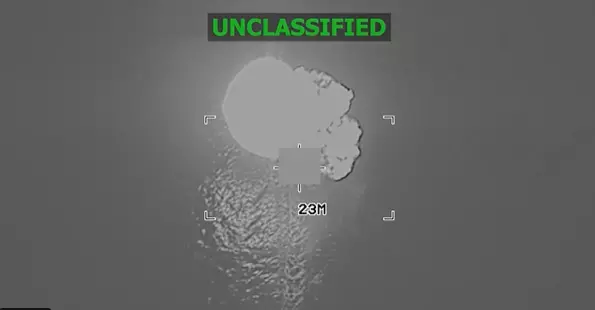
The United States military carried out precision bombing on Saturday evening local time on Iran’s Fordo, Natanz, and Isfahan nuclear facilities, employing B-2 Spirit bombers with GBU-57 “bunker-buster” bombs in the first combat employment of such weapons. The Pentagon announced 14 of the huge weapons were dropped against hardened underground targets, with other Tomahawk missiles launched from subs aimed at supporting infrastructure.
President Trump announced the strikes in a White House television address, proclaiming the Iranian targets “completely and totally obliterated”. He warned of additional action if Iran did not “choose peace”.
Flanked by his national security team leaders, Trump reiterated that there will be either peace or disaster for Iran, considerably bigger than what has been witnessed over the last eight days.
Araqchi described the American strikes as an “act of aggression” that had been planned in cooperation with Israel and both were culpable for involving the region in a “dangerous and unlawful war”. He demanded that the U.N. Security Council hold an emergency meeting and accused the International Atomic Energy Agency (IAEA) of complicity, claiming that intelligence conveyed through the agency “paved the way for war”.
Tehran has already responded with a barrage of missile strikes against Israeli towns Tel Aviv and Haifa, wounding at least 86 people, reports have said. Araqchi asserted that Iran’s retaliation was only the first phase. Additionally, Araqchi warned that neutrality in the face of such evident hostility will bring the world to an unparalleled degree of danger and lawlessness. He also emphasized that Iran will use any means necessary to safeguard its sovereignty.
International reaction to the U.S. attacks has been highly polarised, with the United Nations Secretary-General Antonio Guterres condemning the strikes as “dangerous escalation” and demanding immediate de-escalation.
While EU foreign policy chief Kaja Kallas echoed the call for restraint, asking all parties to “go back to the negotiating table”, UK Prime Minister Keir Starmer welcomed the US action as a response to a “grave threat” but asked Iran to turn to diplomacy as well.
Russia condemned also the attacks, with President Dmitry Medvedev accusing Trump of announcing a “new war” despite his promises of peace. India’s Prime Minister Narendra Modi called for “dialogue and diplomacy as the way forward”. Meanwhile, Saudi Arabia expressed deep concern, while Oman condemned the attacks categorically.
On the other hand, President Trump’s move to request congressional support for the attacks has been condemned by Democratic and some Republican lawmakers.
Senator Bernie Sanders denounced the strikes as “grossly unconstitutional”, recalling that war is to be declared by Congress. As House Minority Leader Hakeem Jeffries warned of “a potentially disastrous entanglement in another Middle Eastern war”, Rep. Marjorie Taylor Greene, one of President Trump’s strongest supporters, criticized it, saying, “This is not our fight.”
Others in the Republican Party, including Senator Ted Cruz, agreed with Trump’s moves, calling them essential to rein in Iran’s nuclear ambitions.
According to BBC security analysts, Iran must now decide whether to launch a major attack right away, wait for another one, or take a diplomatic approach. Every course is extremely dangerous and will influence the intensity of the subsequent violence.
Araqchi reiterated that Iran’s nuclear program has always been peaceful and reaffirmed the country’s compliance with self-defense under Article 51 of the U.N. Charter. “The Iranian people will never compromise on independence and sovereignty,” Araqchi asserted. “We won’t be frightened. We won’t be silenced.”
As tempers rise, the spectre of an all-out Iran-U.S. conflict, and perhaps a broader war, now looms over the region. The next couple of days will determine whether or not diplomacy can steer the region from the brink or whether the world is about to enter a new and dangerous chapter.
About The Author