Venezuela has turned to the UN Security Council for help, denouncing the US seizure of the oil tanker and crew as "blatant theft" and "international piracy". Image credit: The Post News
(The Post Script)- US President Donald Trump’s decision to impose a “total and complete blockade” on sanctioned oil tankers entering and leaving Venezuela has sparked intense debate and raised concerns about global oil market stability. The move aims to pressure Nicolas Maduro’s government, citing terrorism, drug smuggling, and human trafficking, but Venezuela’s government rejects this as a “grotesque threat” and an attempt to control their oil reserves.
The blockade has led to a rise in oil prices, with Brent crude futures up 1.2% at $59.62 a barrel and US West Texas Intermediate crude up 1.3% to $56.00 a barrel. The US has deployed thousands of troops and nearly a dozen warships, including an aircraft carrier, to the region.
Venezuela’s crude exports have fallen sharply since the US seizure of a sanctioned oil tanker last week, worsened by a cyberattack on state-run PDVSA’s systems. China is the biggest buyer of Venezuelan crude, accounting for roughly 4% of its imports.
The US Congressman Joaquin Castro has criticized the blockade, calling it “unquestionably an act of war” and questioning Congress’s authorization. International law scholar Elena Chachko has also raised concerns about the domestic and international law implications of Trump’s blockade.
Venezuela’s government vows to defend its homeland and maintain peace, while the US has formally designated Venezuela’s Cartel de los Soles as a foreign terrorist organization. The blockade’s impact on oil prices could be $5-8 per barrel if Venezuela’s exports aren’t replaced by OPEC spare capacity.
Russia’s Foreign Ministry has warned that tensions around Venezuela could have unpredictable consequences.
Venezuela has turned to the UN Security Council for help, denouncing the US seizure of the oil tanker and crew as “blatant theft” and “international piracy”. The US has sanctioned over 30 ships in Venezuelan waters or approaching the country, with more expected.
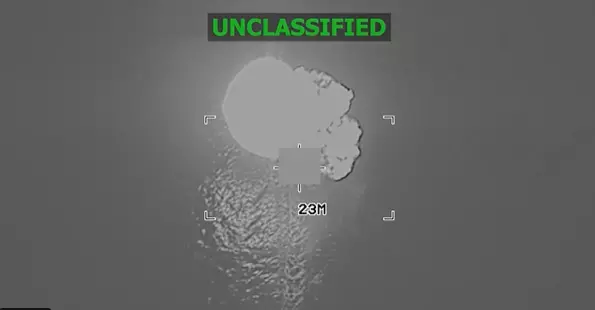
The US Navy has 11 ships in the region, including an aircraft carrier and amphibious assault ships. Trump’s chief of staff, Susie Wiles, said Trump “wants to keep on blowing boats up until Maduro cries uncle”.
The international community is watching the situation closely, with concerns about the humanitarian impact on Venezuela and the potential consequences for global oil markets.
The situation is likely to continue to escalate, with potential implications for global stability and oil markets.
About The Author