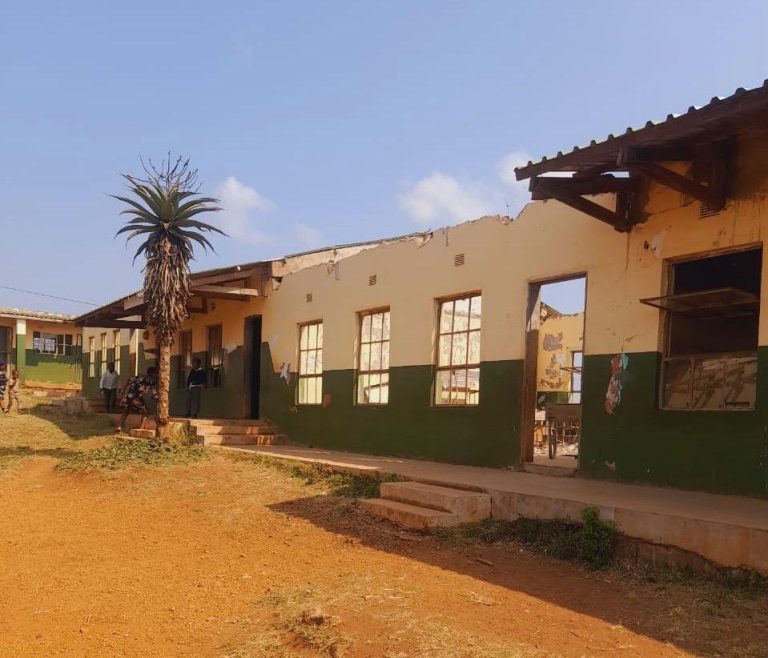
Damaged classrooms at Isigcino Primary School. Photo credit: Nothando Mtshali
Isigcino Primary School in KwaZulu-Natal stays a hurting reminder of the devastating floods that pull apart through the province more than two years ago. Solid rains damaged the school, and authorities still have not fixed it, leaving hundreds of learners without proper classrooms and exposing them to risky learning conditions.
Community members and parents have raised concerns over the dangerous environment, saying their children must study in overcrowded short-term structures. Some classes happen under worn-out tents, while others squeeze into the few classrooms that survived the floods. Many parents argue that their children need the same safe learning place as learners in other school.
Promises Made, but No Action Taken
“The Department of Education promised us that Isigcino Primary would be fixed, but to this day, they have done nothing. Our children are suffering,” said a frustrated parent, adding that the situation has draw on for far too long.
Teachers say the poor infrastructure has affected the standard of education, with many learners struggling to focus on unstable conditions, while the lack of proper cleansing and electricity in some areas has worsened the disaster.
Slow Progress Authorities
The Department of Education in KwaZulu-Natal previously reported plans to fix flood-damaged schools, but progress at Isigcino moves painfully slowly. Civil society groups are now calling for urgent intervention, warning that neglecting schools like Isigcino Primary only increase imbalance in the education system.
For the learners, each day at school reminds them that authorities have forgotten them. “We just want safe classrooms to learn in,” said one Grade 6 pupil.
As the rainy season approaches once again, the community fears further damage and pleads with authorities to rebuild and restore Isigcino Primary School.
Education specialist emphasize that safe and good classrooms directly support learner’s mental well-being, their academic growth, and long-term opportunities. Without immediate repairs, children risk falling behind in key subjects.
About The Author